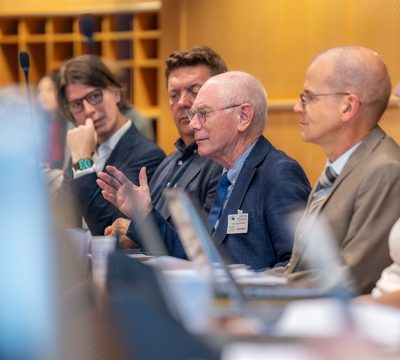
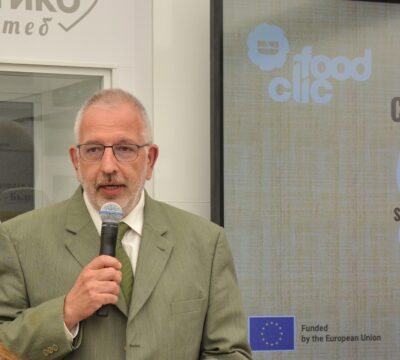
This week, on 22 April, FEBA hosted a webinar on the EU Waste Framework Directive (WFD). Coinciding with Earth Day, the event served as a powerful reminder that this Directive is more than just a regulatory requirement; it is one of our most potent tools for environmental protection and ecological preservation.
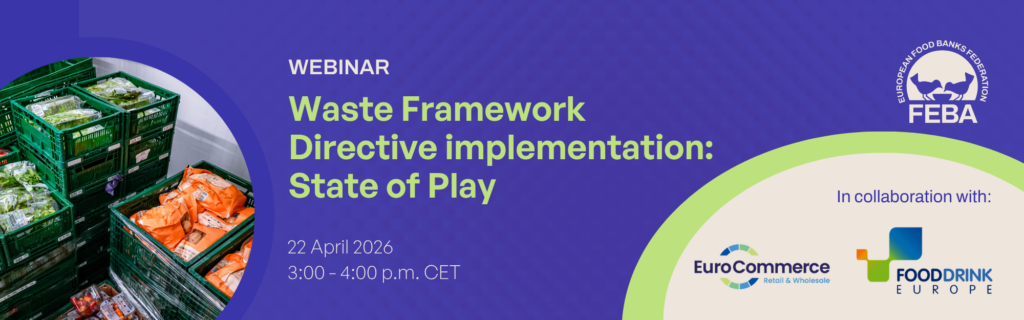
The Directive brings a fundamental shift in how we view surplus. It explicitly places food intended for human consumption at the top of the food waste hierarchy. By specifically referring to food banks and redistribution operators, Article 9a of the revised WFD elevates food redistribution from a voluntary practice to a central policy priority.
Lessons Learned From the Webinar
EuroCommerce and FoodDrinkEurope, who we thank for their strategic collaboration for the webinar, stated that successful food recovery requires a strong bridge between European law and the food supply chain. The dialogue with the private sector made it clear that expanding redistribution solutions requires a robust framework and deeper cross-sector collaboration to overcome current operational barriers, and retail regulations are an essential prerequisite to unlocking large-scale donations.
The discussion was further enriched by DG SANTE and the Harvard Law School Food Law and Policy Clinic, which elaborated on how the WFD is a Member State-driven tool. Success depends on strengthening national prevention programs and designating clear authorities for policy coordination. Moreover, the Directive provides the legal “space” for Member States to mandate donations. However, policies must be co-designed with recovery organisations to ensure they are logistically viable and operationally sound.
Consultation With Food Banks Must Happen Now
Following the valuable insights of our speakers, we now know that with the Directive’s transposition deadline approaching, Member States have a critical window to act. FEBA’s message is clear: food banks are not just recipients of surplus food; they are operational partners with critical expertise on logistics, capacity, and real-world constraints. Early consultation is the only way to ensure that the Directive’s ambitions are matched by operational reality.
Next Steps: Monitoring the Transposition
This webinar is only the beginning. FEBA is committed to have regular checkpoints to monitor the developments of the Directive. Our next major milestone will be the FEBA Annual Convention, where we will provide a comprehensive overview of the WFD’s progress in collaboration with Harvard Law School, EuroCommerce, and FoodDrinkEurope. Furthermore, we will gather for a high-level institutional meeting on September 29 in observance of the International Day of Awareness of Food Loss and Waste (IDWFLW). This event will focus specifically on the pivotal role of food banks in tackling waste and loss as the WFD advancements take shape.
🎥 Missed the webinar? You can watch the full recording and catch up on the discussion via the YouTube link below: Watch the WFD Webinar Recording