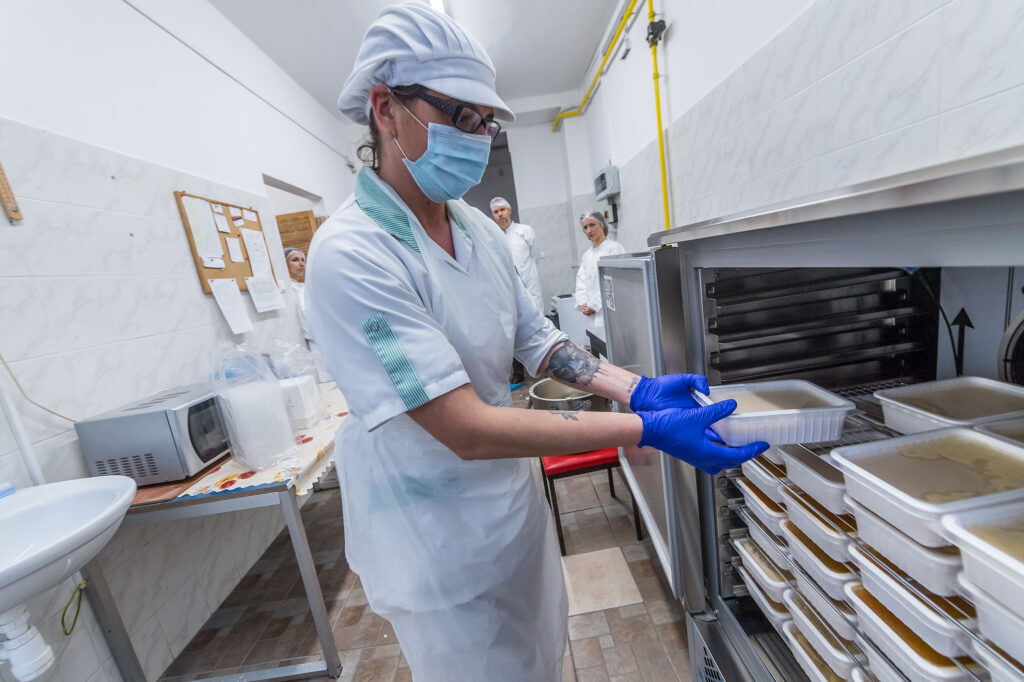
Magyar Élelmiszerbank Egyesület (Hungary) has reached a major milestone in its school meal rescue programme: 500,000 portions of lunch have been saved from school canteens in Budapest and redistributed to people in need.
The initiative was launched through the cooperation of the Municipality of Budapest and the Hungarian Food Bank Association as a part of the FoodCLIC project partnership. The programme is strengthened through the professional involvement of FEBA, helping connect local innovation with wider European knowledge-sharing and best practices.
Reducing Food Waste, Supporting Vulnerable Communities
The project tackles two pressing challenges at once: reducing food waste and supporting vulnerable communities. Every day, surplus meals that remain safe and suitable for consumption are collected from participating schools instead of being discarded. These meals are then delivered to social organisations that distribute them to families, elderly people, and others facing hardship.
As highlighted by the organisers, perfectly edible food should not be wasted while many still struggle to access regular meals. This principle is at the heart of the programme and shows how practical cooperation can generate immediate social and environmental value.
Local Solutions Turn Surplus Food to Social Value
The Budapest model demonstrates how municipalities, schools, mass catering providers and civil society can work together to create efficient local solutions. By redirecting edible surplus food, the initiative helps reduce disposal costs, lower greenhouse gas emissions linked to wasted food, and provide nutritious meals where they are most needed.
The success of the programme also underlines the wider potential for cities across Europe. School catering systems generate predictable volumes of surplus food, making them particularly suitable for organised recovery schemes. With the right partnerships and logistics, municipalities can turn avoidable waste into social value.