On 9 November 2026, an unusual installation transformed Prague’s Wenceslas Square into an open-air exhibition of human stories.
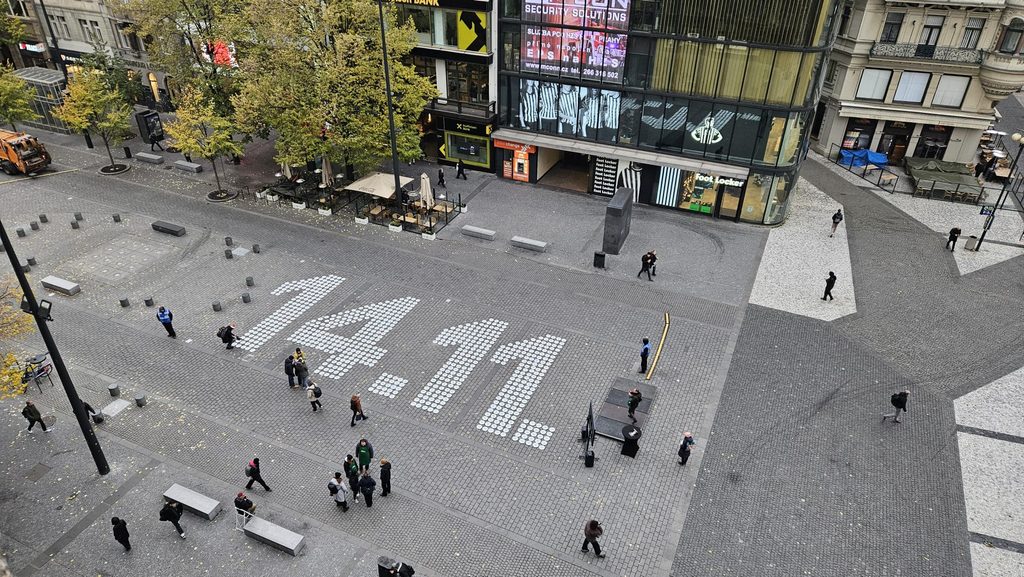
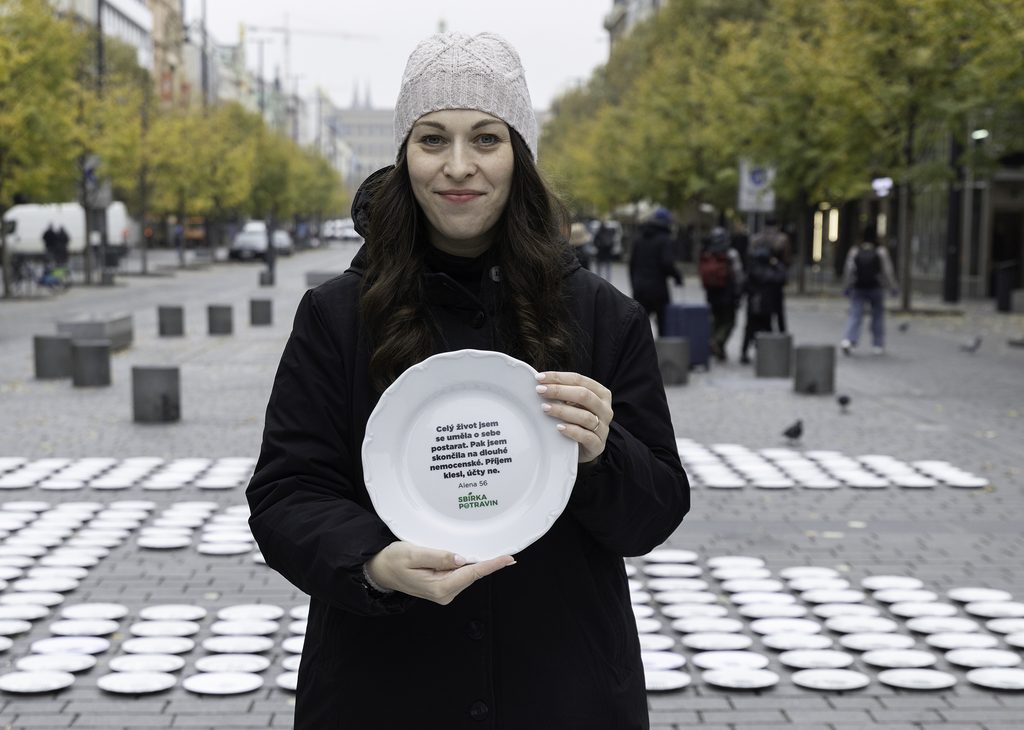
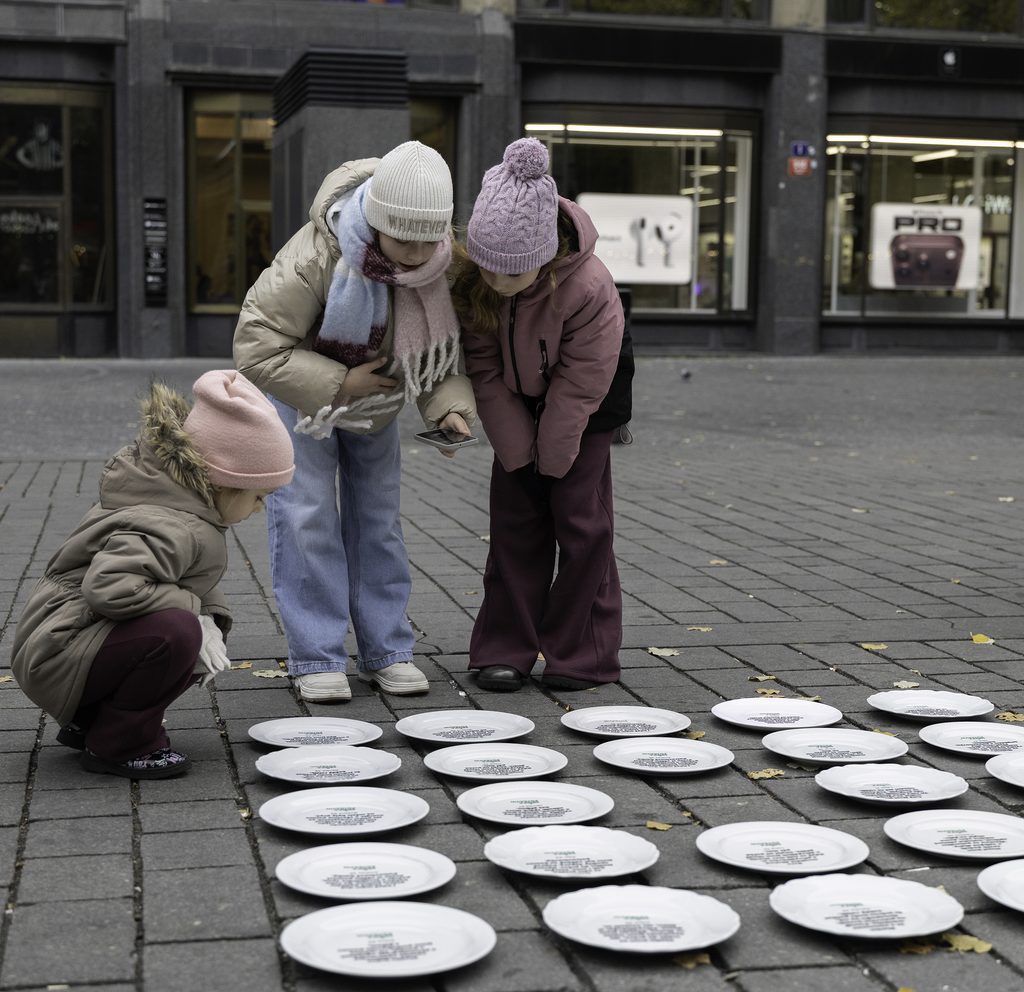
More than 800 empty plates were laid out in the lower part of the square, at Můstek, forming the date 14 November, the day of the national food collection. Each plate carried a short, authentic story of someone experiencing food insecurity. These were not fictional characters, but real-life situations: a single mother struggling to make ends meet, an elderly person having to choose between buying food and medicine, or a family whose financial stability had been shattered by illness, unemployment or unexpected expenses.
The installation was a powerful visual reminder that food poverty is often invisible. Many affected people work, raise children, or live on a pension. They are not necessarily homeless or visibly disadvantaged. They are people who, after paying for housing and other essential expenses, simply cannot afford enough food.
The scale of the problem in the Czech Republic is significant: approximately one million people live at or below the income poverty line.
A symbolic location for a powerful message
The choice of location for the installation, Wenceslas Square, is one of the most significant public spaces in the Czech Republic. It is not just a busy boulevard in the centre of Prague; it is a place deeply embedded in the country’s collective memory and national identity.
In October 1918, the independence of Czechoslovakia was proclaimed here. In November 1989, Wenceslas Square became the heart of the Velvet Revolution, when hundreds of thousands of people gathered to demand freedom and democracy and bring an end to communist rule.
For Czechs, the square is a place where important messages are brought to public, where society comes together and where change begins. Bringing the stories of people facing food insecurity to this location was therefore a deliberate choice: a social issue that often remains hidden behind closed doors was placed right in the middle of the national public space.
Partners, influencers and a shared commitment
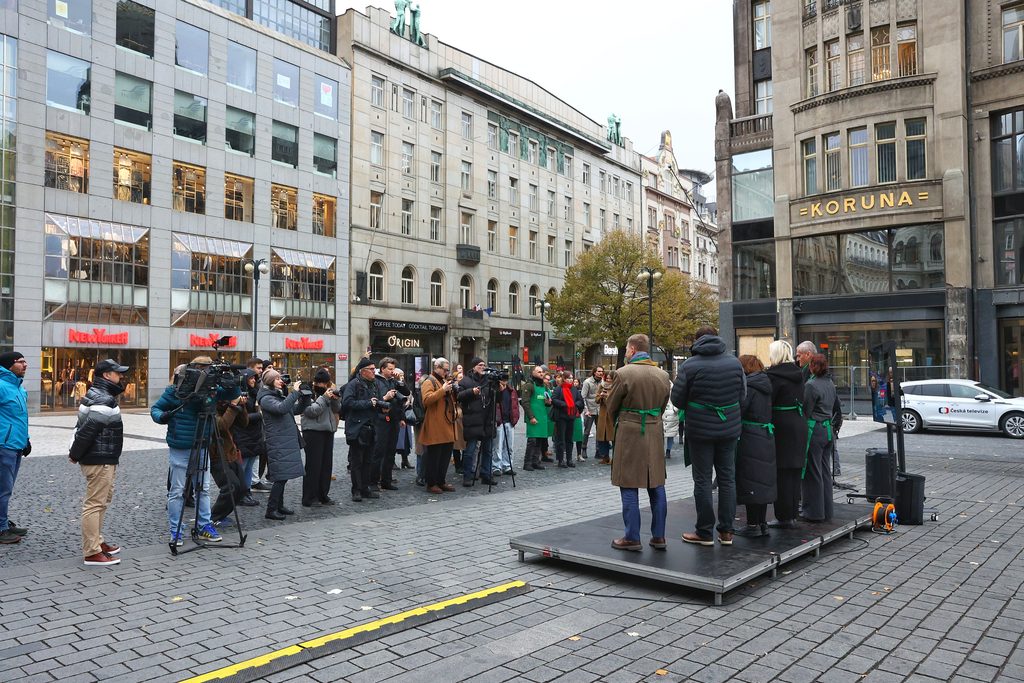
The installation was also the setting for the official opening press conference of the Autumn Food Collection. Representatives of Potravinové banky, retail partners, government, Prague City Hall and the non-profit sector came together to launch the final phase of the campaign.
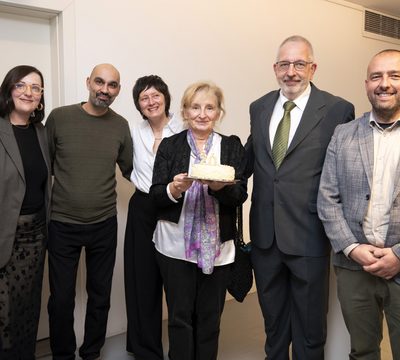
A particularly meaningful part of the event was the involvement of representatives of the participating retail chains. Each partner received their own plate, featuring one individual story, as a symbolic invitation to become part of the initiative. They were photographed holding their plates, creating a strong visual statement of their commitment to helping people in need.
This simple but powerful gesture allowed partners to publicly associate themselves with the campaign’s central message, while also providing them with authentic photographs for their own internal communications, employee engagement and PR activities. Rather than just being sponsors or collection points, retailers became visible ambassadors of the campaign’s values.
The event also attracted more than 15 influencers, who supported the initiative pro bono. By sharing the installation and its message through their own social media channels, they helped reach audiences beyond the traditional supporters of food banks and charity initiatives.
The result was a collective communication effort in which retailers, public figures, influencers and institutions all became part of the same story.
An initiative that travels across the country
The plates did not remain on the square. Their journey became one of the most distinctive elements of the campaign.
One week before the collection, the Czech Parliament’s catering served all meals on the very same symbolic plates. The event brought together politicians from different, politically opposed parties, united around helping people experiencing food insecurity.
A video capturing this unusual cross-party expression of solidarity became another important campaign asset. In a time of considerable political polarisation, the images sent a particularly strong message: hunger and the need for help are not just political issues, and solidarity can bring people together regardless of their differences.
The campaign also received high-profile support from the country’s presidential couple. The First Lady, Eva Pavlová, shared two posts supporting the Food Collection on her social media channels, and President Petr Pavel subsequently reposted the message, extending its reach even further.
Meanwhile, the visual identity and message of the campaign reached audiences throughout the country. The creative concept was supported by a television commercial broadcast by Czech Television in premium advertising slots, complemented by a nationwide outdoor campaign. LED screens in city streets, underground stations and other public spaces carried the campaign message, while large-format LED displays brought it to regional centres across the country.
The plates and their stories therefore became much more than a one-day installation. They provided a recognisable visual symbol connecting public events, political engagement, influencer communications, television and outdoor advertising.
Combining creative installation and national media event
The Wenceslas Square press conference was designed as an experience rather than a conventional media briefing. Journalists and decision-makers were invited directly into the installation, with the plates themselves providing the backdrop, the visual evidence and the central message of the event.
The installation was developed with creative agency Dentsu Creative as part of the campaign concept “Food the World Has Never Seen Won’t Feed Anyone”. The campaign played with the idea of imaginary dishes and non-existent food, highlighting the reality of people who cannot afford even an ordinary meal.
The result was a highly photogenic and media-friendly story. National news agencies, television stations, online media and marketing publications covered the installation, bringing the campaign well beyond its immediate audience.
Importantly, communication did not end with raising awareness. Every message led to a clear call to action: join the Food Collection on 14 November and help fill those empty plates.
A collection that turned attention to solidarity
The success of the autumn campaign was not simply the result of one collection day. It was the outcome of a carefully coordinated communication strategy, strong creative thinking and a long-standing partnership between food banks, retailers, NGOs, public institutions, influencers, volunteers and the media.
The Wenceslas Square installation gave the campaign a distinctive identity and a strong emotional starting point. It transformed an abstract social problem into hundreds of individual human stories, brought those stories into a place of national significance and created a natural bridge between public awareness and practical action.
The journey of the plates, from the streets of Prague to retail partners, Parliament, television screens and social media, demonstrated how a single creative idea can unite very different stakeholders, generating a much wider impact.
The message of this year’s campaign is that empty plates can be filled. And when creativity, solidarity and cooperation come together, even a single day of collective action can make a record-breaking difference.
Read more about the record-breaking response on National Food Collections Across Europe Break Records in this Holiday Season
Thank you, Vendula Seifertová from Potravinové banky, for sharing this text and initiative with FEBA!