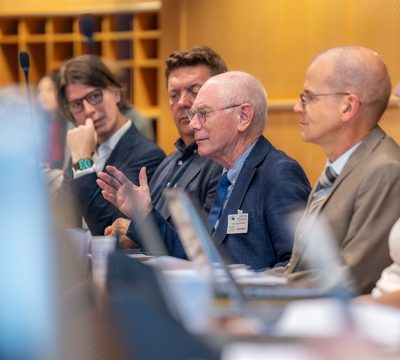
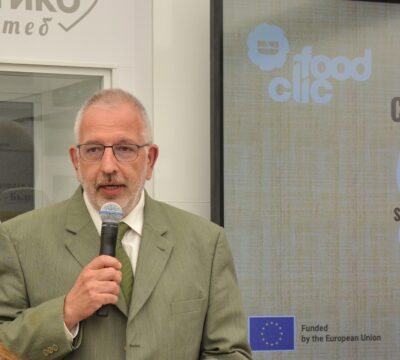
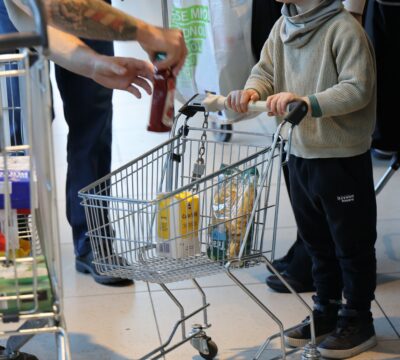
“Aider l’homme à se restaurer. Le double sens du verbe, nourrir et remettre debout, résume en un slogan puissant la finalité de leur projet. Outre le corps, on peut nourrir son esprit, et son cœur d’espérance et de solidarité. / Helping people to restore themselves. The double meaning of the verb, to nourish and to restore, sums up the purpose of our project in a powerful way. Besides the body, one can nourish one’s mind and heart with hope and solidarity.” – Bernard Dandrel, FEBA Founder
1980s: All Begins With Local Acts of Solidarity
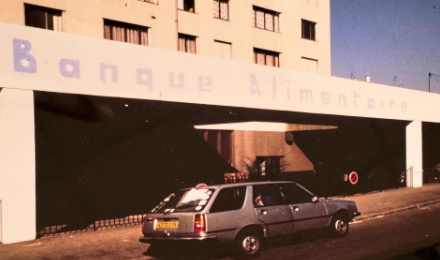
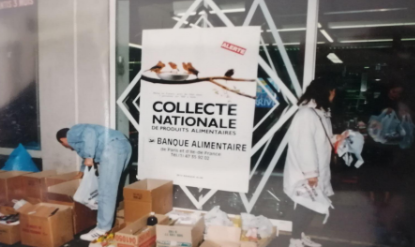
The food banking movement in Europe began in France in the early 1980s. Sister Cécile Bigot, troubled by the food getting thrown away while people were hungry, wrote a column in a local newspaper. The column reached a Canadian food banker traveling in Europe, Francis Lopez, who reached out to Bigot and told her about the concept of food banks developing in Canada and the United States. Sister Bigot contacted Bernard Dandrel, who, together with members from local charities, created the first food bank in France.
The first food bank, La Banque Alimentaire de Paris et de l’Île-de-France (Bapif), was entirely run by volunteers in an old church that was generously lent for free for a good cause. The first donation was a litre of oil from a local woman, with very little herself. From the beginning, these principles, donation and sharing, and restoring dignity to every person, regardless of their circumstances, guided the movement.
1986 – 1990s: Foundation for Shared Identity of Food Banks in Europe
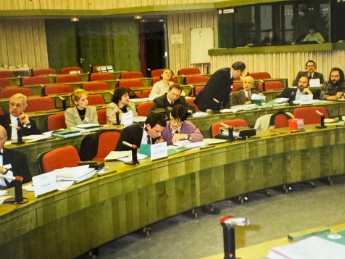
In 1986, the European Food Banks Federation (FEBA) was founded by Bernard Dandrel together with Andre Hubert (the founder of the first food bank in Brussels) to unite the growing network of food banks and share knowledge inspired by successful models in Canada and the US. The early years were spent defining FEBA’s role and principles, guided by the Charter of Food Banks. Dandrel visited neighboring countries in Italy, Portugal, Spain, Greece, Poland, and the Czech Republic, and started the first political conversations with the European Parliament about the donation and redistribution of surplus food for those in need.
2000s: Expanding the Mission to Reduce Hunger in Europe
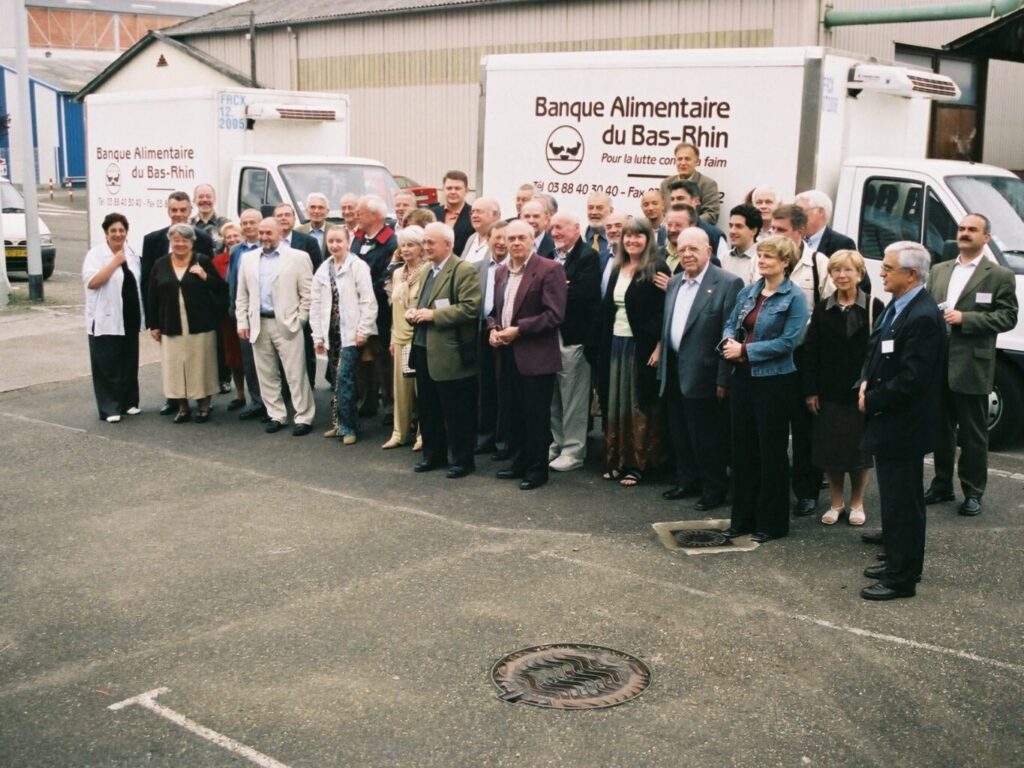
Food banks started to receive larger quantities of various food products, which required more advanced equipment and expertise. FEBA started to build its role in European policy and advocacy, promoting food donation and fighting food waste. FEBA launched support programmes, organised workshops and events, and participated in EU initiatives, consultations and projects.
2010s: The Role of Food Banks in the Changing Society
Political interest in sustainability and health, the rapidly evolving technical and digital landscape, and changing priorities in the corporate world brought anxiety and instability to the lives of people, organisations, and businesses. Food banks needed to adapt to the changing Europe to best help those in the most need, and to ensure that the guiding principles – donation and sharing – were not forgotten.
FEBA’s headquarters moved to Brussels to be closer to the beating heart of the European Union and its institutions. This way, the federation was taking steps towards more impactful political advocacy and connections.
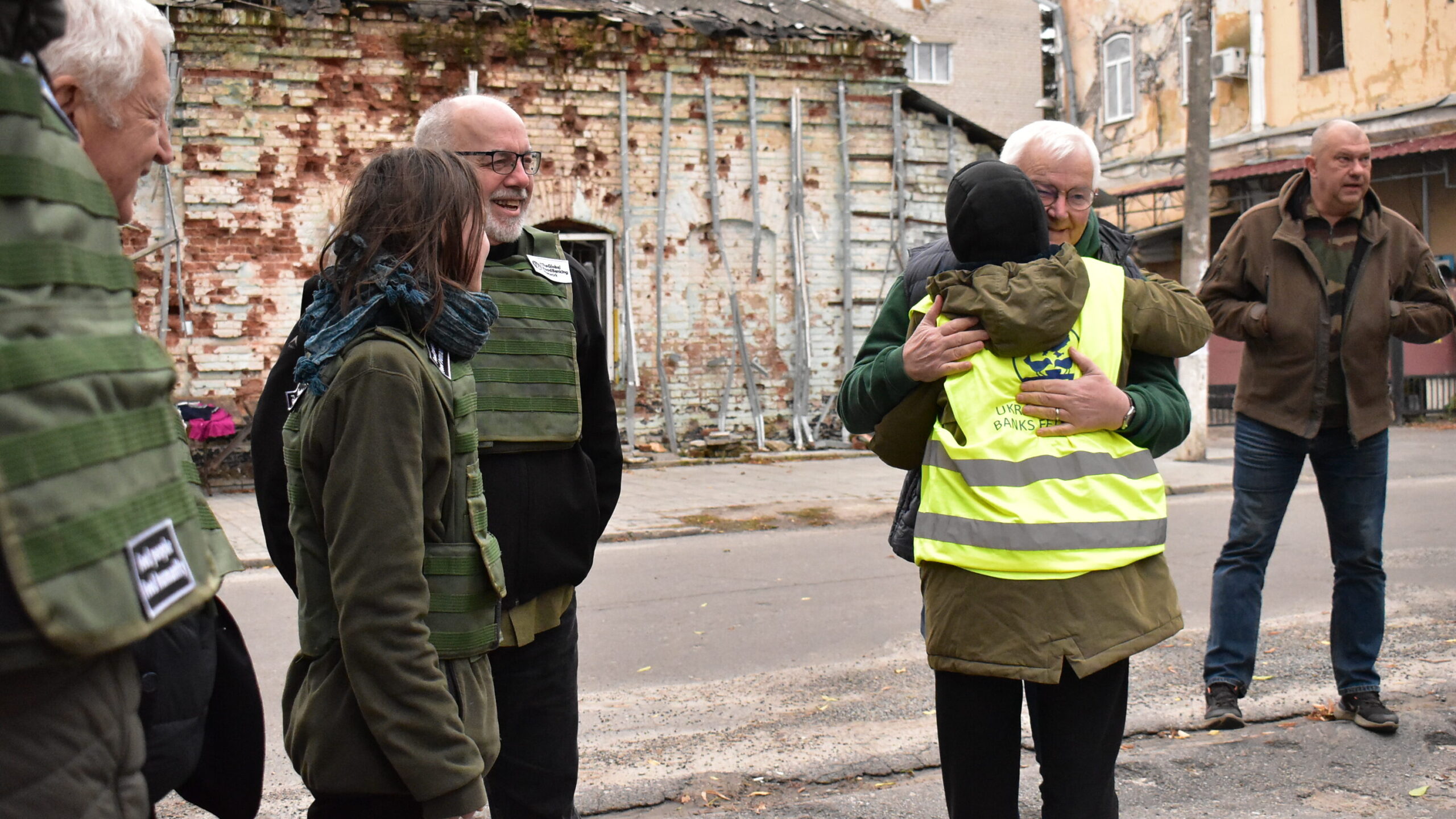
2020s: Strengthening Our Shared Impact
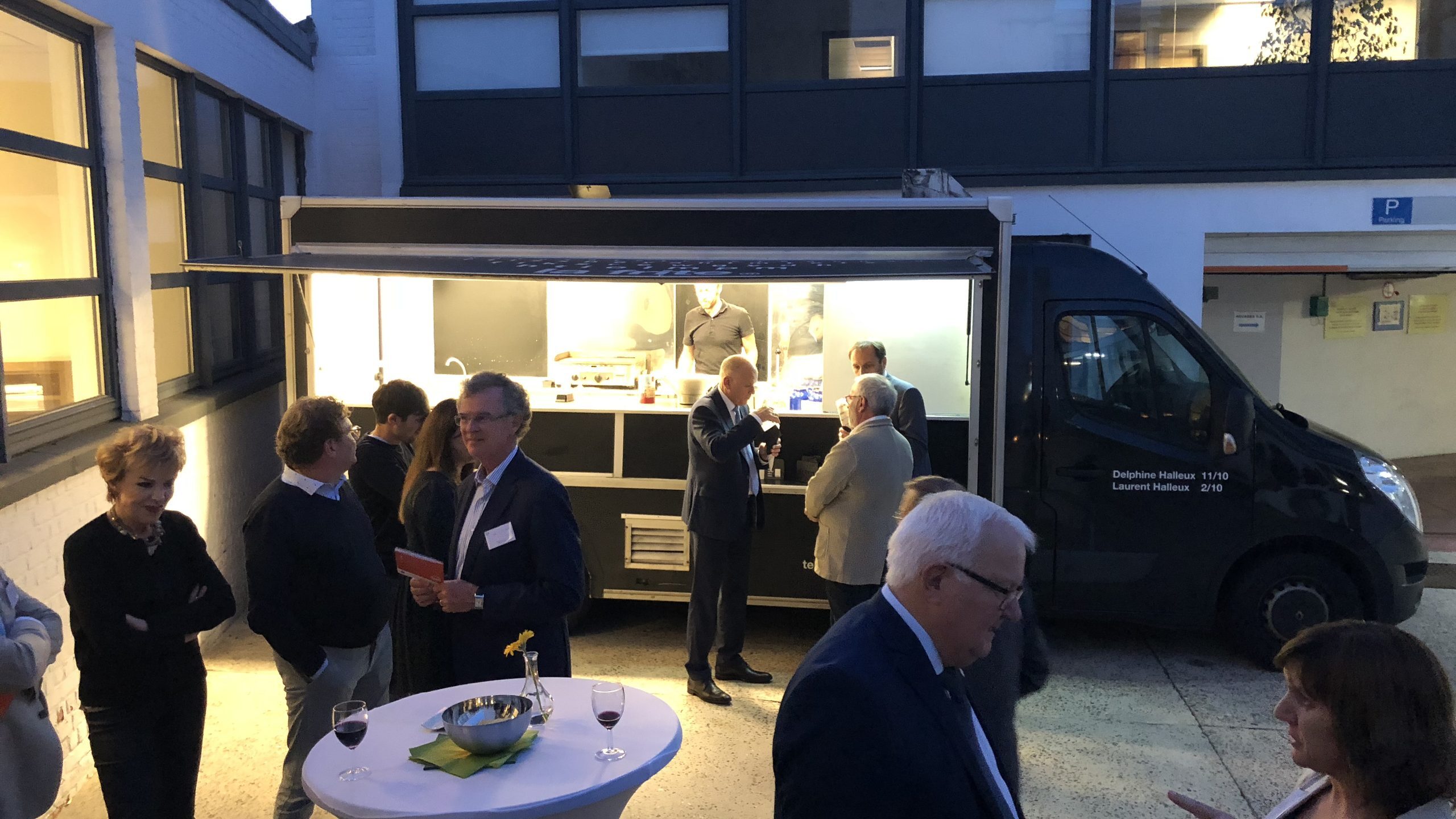
Political turmoil due to the global pandemic and geopolitical conflicts contributed to rising levels of social and economic insecurity. This called for stronger advocacy, and showing the impact of European food banking to the world: FEBA network developed more coordinated and consistent data collection methodology, strengthened fundraising mechanisms, and information exchange among members and partners.
In 40 years, FEBA has grown from local solidarity and volunteering to a professional network that works together towards a hunger-free Europe.
“Food Banks are an integral part of the food system because they promote the transition from a linear to a circular economy: what could be lost or wasted is re-valued for the benefit of the economy, the planet, and people.” Jacques Vandenschrik, 2020
Sources: Previous FEBA annual reports (2017-2025); Bernard Dandrel: Aider l’homme à se restaurer : livre mémoire des banques alimentaires, Louviers, HB Impressions, 2011; Interviews with Dandrel and Vandenschrik (2021); Previous FEBA Annual Convention materials (2005-2025); Archives of FFBA