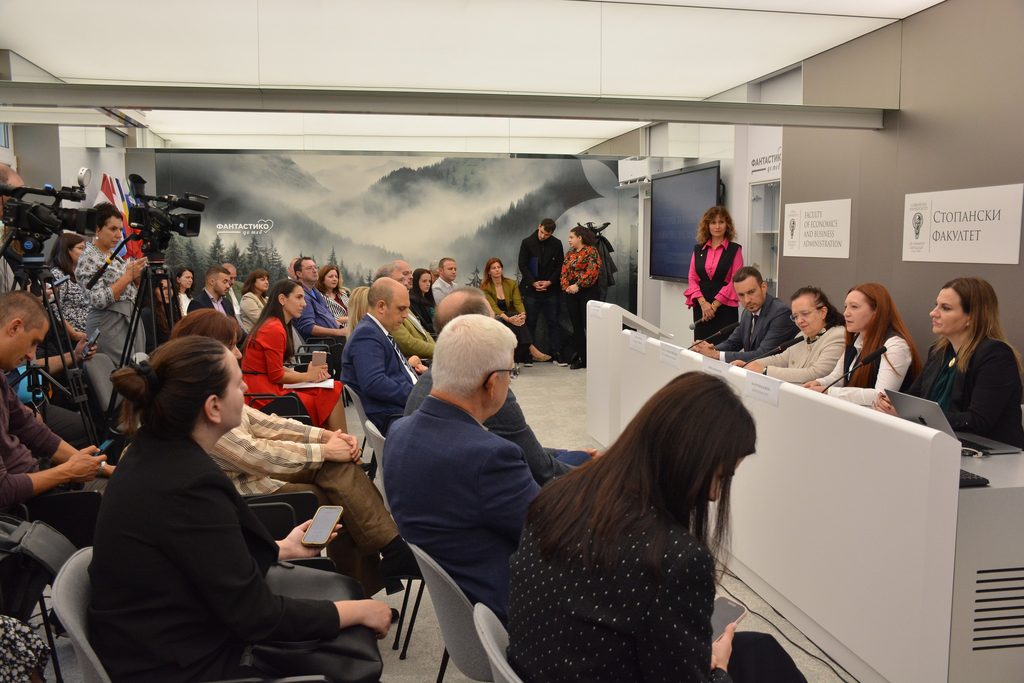
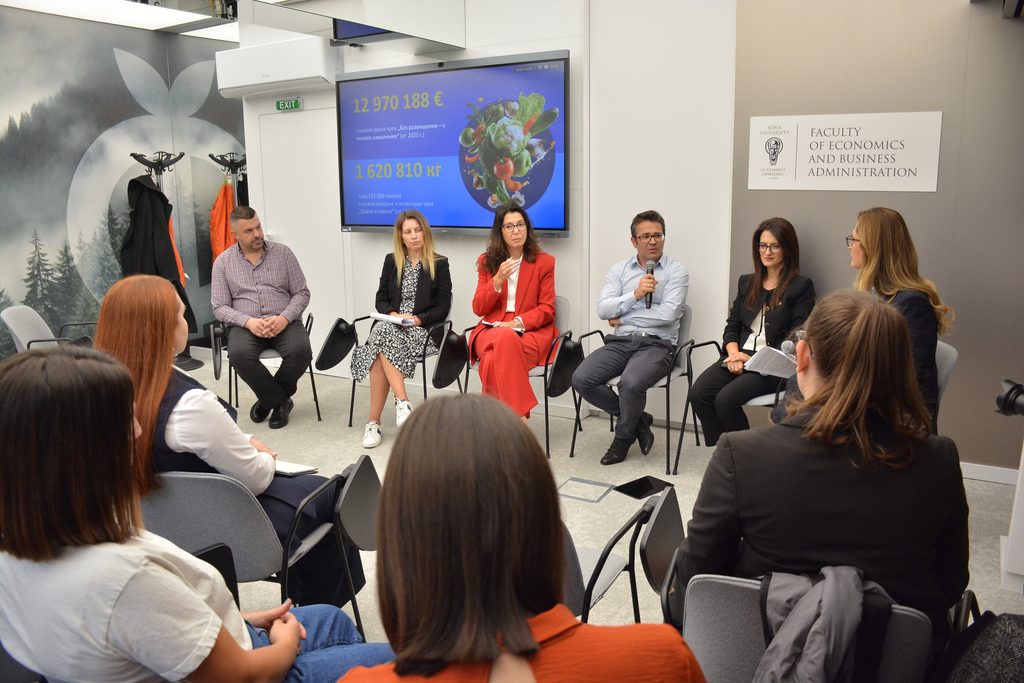
On 29 September, the Bulgarian Food Bank and Sofia University hosted “Food for Tomorrow: Serving Solutions for People and Planet”, bringing together key stakeholders to discuss how cities, Food Banks, public authorities and businesses can work together to build more sustainable, resilient and socially inclusive urban food systems. The event was organised by the Bulgarian Food Bank within the framework of the FoodCLIC project funded by the European Union.
Signing Commitments to Climate Targets: Joining Sofia’s Climate City Contract
A key moment of the day was the expansion of Sofia’s Climate City Contract, with new partners – including Sofia University, Fantastico Group and the Bulgarian Food Bank – formally joining the initiative and committing to support the city’s climate objectives. The signing ceremony was attended by Sofia Mayor Vassil Terziev and representatives of the new partner organisations.
It is important to add to the presented vision the commitments undertaken by the Bulgarian Food Bank upon joining Sofia’s Climate City Contract. First among them is the construction of a modern Food Resilience Logistics Centre on a site provided by Sofia Municipality, which the Bulgarian Food Bank will operate. The organisation also commits to measuring and tracking emissions from food waste, reporting annually on the climate impact of prevented waste and redirected edible food.
Cross-Sector Workshops: Building Resilience in Urban Food Systems
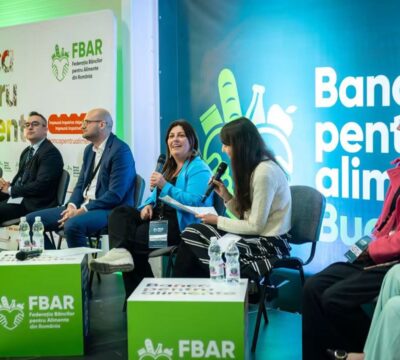
The event workshop brought together representatives from national ministries, Sofia Municipality, the Bulgarian Food Safety Agency, businesses, civil society and academia. Discussions covered food loss and waste policy, the Bulgarian food security framework, delegated distribution, technology-enabled food rescue, cooperation with the private sector and the resilience of urban food systems in times of crisis.
Tsanka Milanova, Executive Director of the Bulgarian Food Bank, presented the organisation’s achievements and growing social impact, highlighting how food rescue and redistribution contribute both to reducing food waste and to supporting people in need. She also underlined the importance of stronger cooperation between public institutions, municipalities, businesses and civil society to further scale these results and strengthen food security in Sofia and beyond.
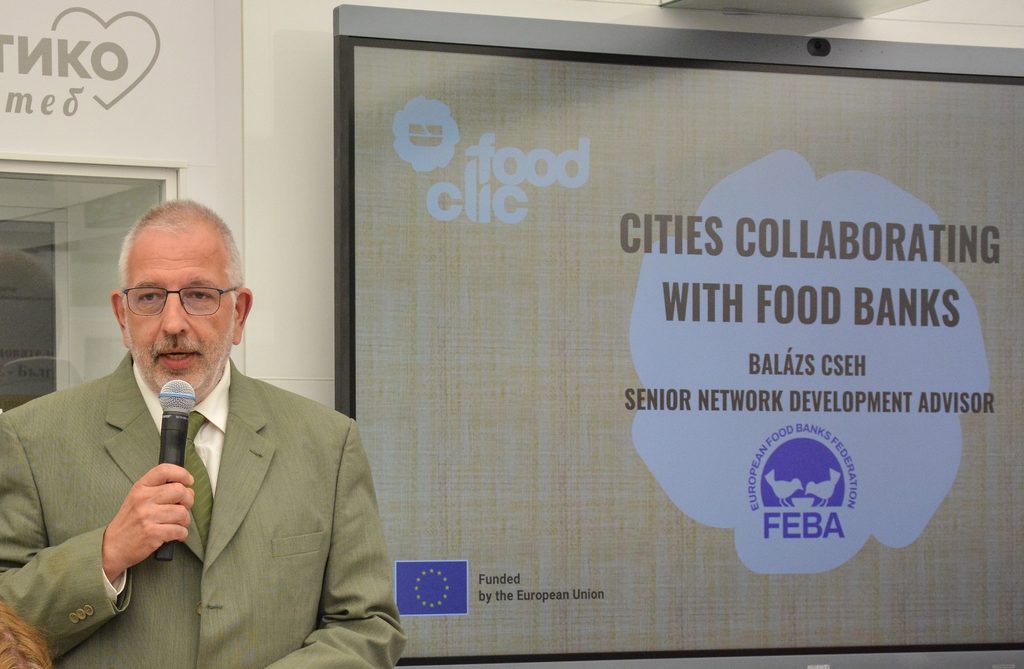
Representing FEBA, Balázs Cseh presented on the future of urban food surplus redistribution, highlighting different logistics models and the potential for stronger cooperation between cities and Food Banks. The presentation also showcased how municipalities can support Food Banks through stakeholder engagement, access to public-sector food surplus, transport and warehouse infrastructure, illustrated by examples from several European cities.
Diverse Partnerships, Scalable Solutions
The forum demonstrated how diverse partnership models with the Bulgarian Food Bank are already working in practice and building real, scalable solutions for a sustainable urban food system:
- Fantastico, a leading Bulgarian retail company – influences consumer behaviour and promotes responsible consumption through awareness campaigns targeting households.
- Lidl Bulgaria – introduces the pilot model for donating frozen meat in Bulgaria, developed jointly with the Bulgarian Food Safety Agency and BFB.
- METRO – applies the innovative delegated distribution model “less, but more often,” which optimises the donation process.
- Parcel Hive – provides automated technological solutions for the last mile and ensures dignified access to food for people in need through smart lockers.
- Mate Kitchen – shapes household habits through a digital ecosystem for responsible consumption and food waste reduction.
The event created a positive platform for dialogue between public authorities, the private sector and civil society, with a shared recognition that reducing food waste and improving food access require coordinated action across the whole urban food system.