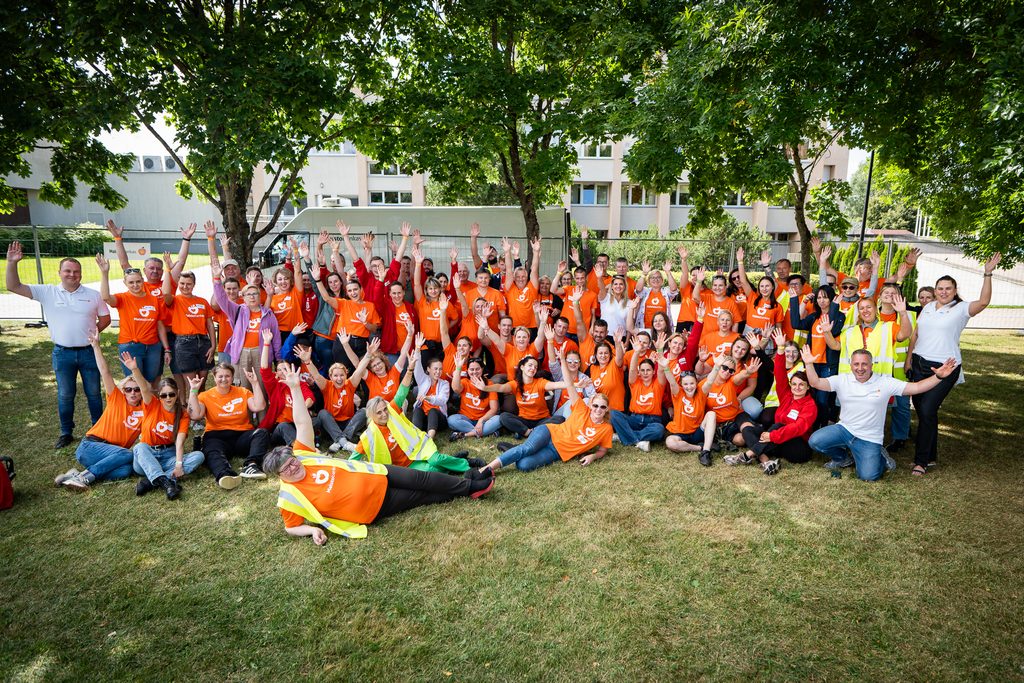
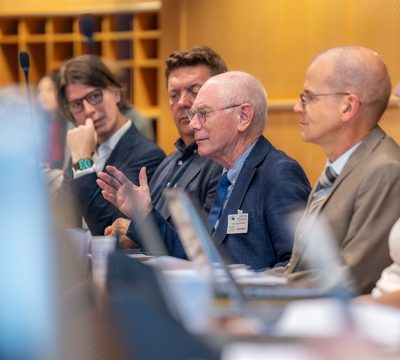
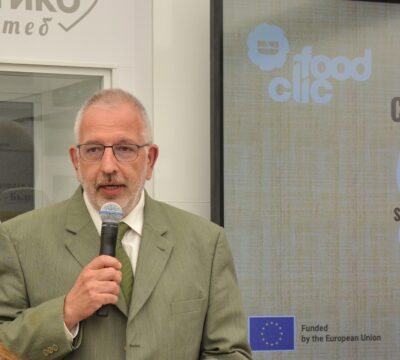
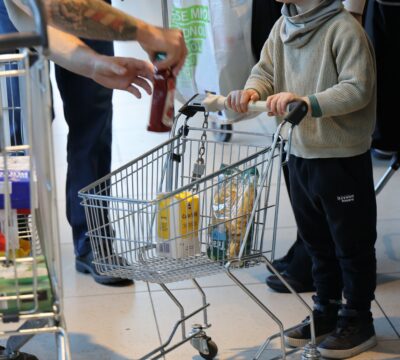
On 11 August 2026, Maisto bankas organised a national civil protection and food aid training exercise in Utena, a city in northeastern Lithuania. Staff from food banks across the country tested their ability to respond to unexpected situations and aid hundreds of people at short notice.
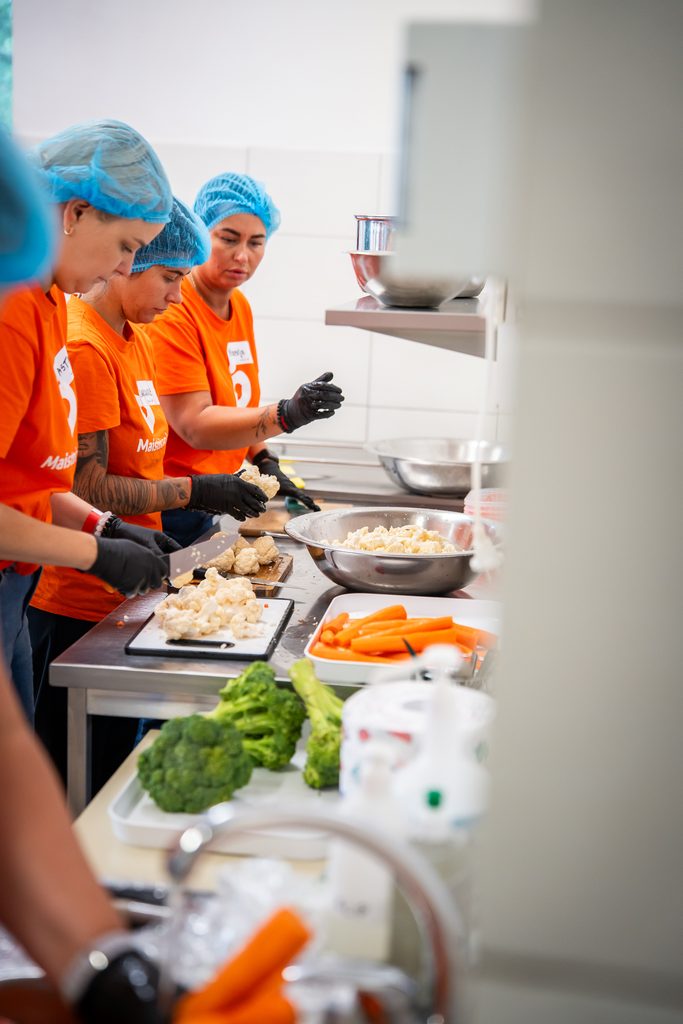
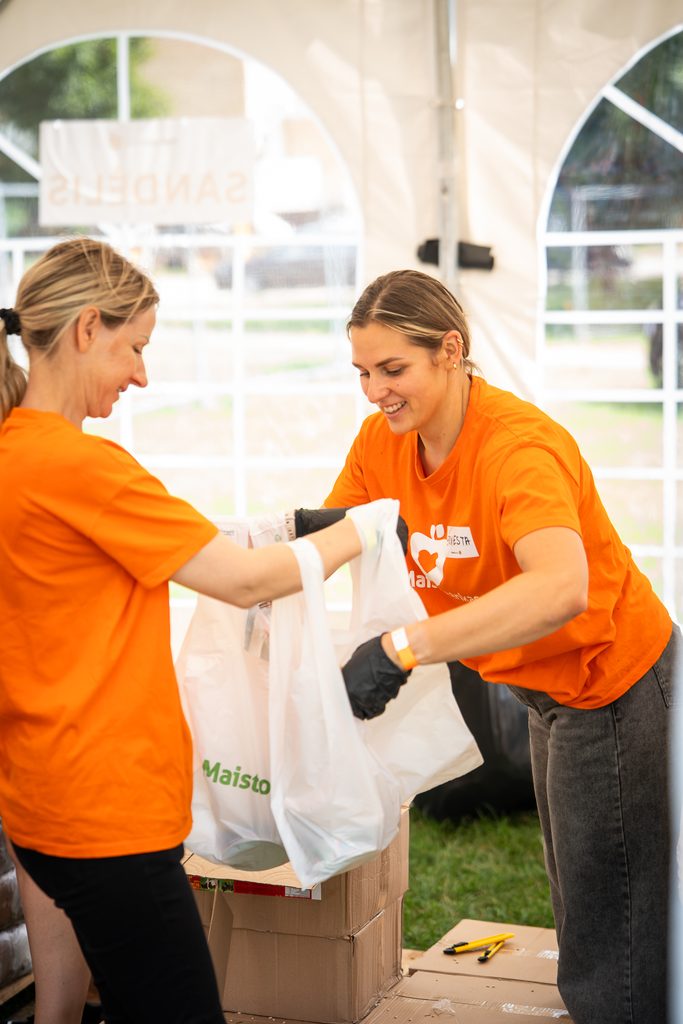
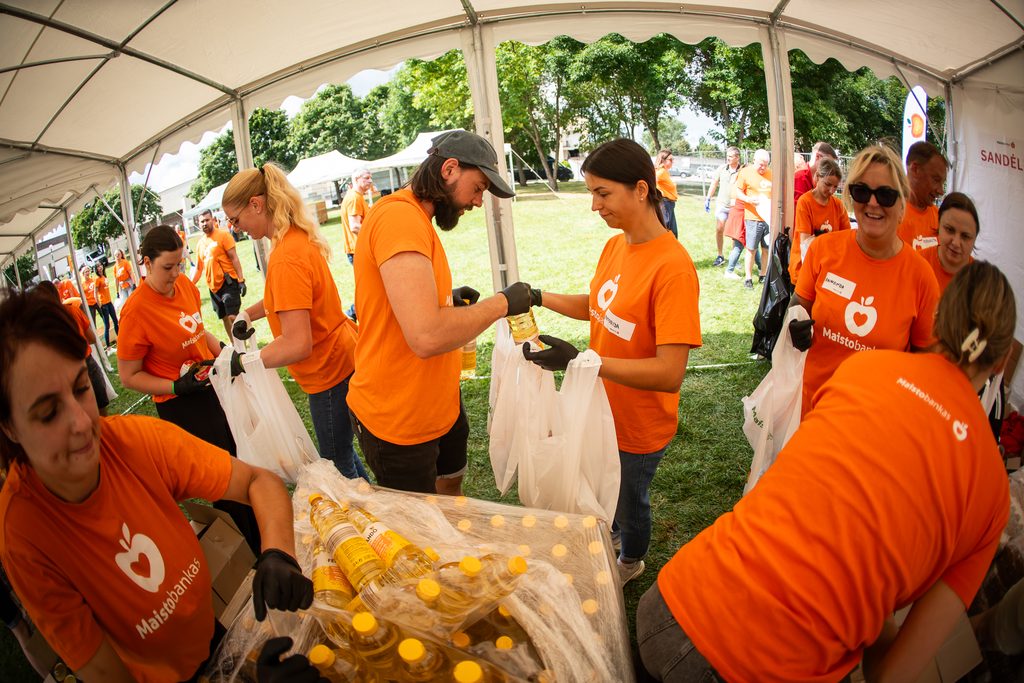
As part of the exercise, participants were presented with a scenario in which 2,000 people had been evacuated from Latvia to the city of Utena. Maisto bankas was to prepare food parcels for 800 people and provide hot meals for another 200. Working in an unfamiliar kitchen at a local school and outdoors, staff unloaded and sorted food supplies, assembled food parcels, prepared meals and organised the distribution of the goods.
Expect the Unexpected: Managing Food Distribution During Crises
The biggest challenge came when a demonstrated air-raid warning was announced while around 500 people in need, who had been invited to participate in the exercise, were gathered to collect food parcels. Food distribution was immediately suspended, and Maisto bankas staff, together with civil protection specialists, had to direct people, many of whom were old or with disabilities, to shelters and other safe locations. Once the simulated danger had passed, the team immediately resumed food distribution. The entire process from responding to the unexpected situation to restoring food assistance was completed within one hour.
Protecting the Most Vulnerable Should Be an Essential Part of the National Preparedness Plans
In Lithuania, residents are advised to be prepared to survive independently for at least three days in the event of an emergency, which means keeping sufficient supplies of food and drinking water. But this raises an important question: what about people who are unable to secure enough food even in everyday life, outside emergencies or wartime? For people experiencing food insecurity, preparing three days’ worth of supplies is impossible. This is an important issue not only for Maisto bankas, which approach to crisis preparedness, but also a key one for food banks across Europe.
Collaboration is the Key: Food Banks Support Local and National Authorities During Emergencies
Maisto bankas is working with local and national authorities to prepare for emergencies and ensure assistance when it is needed most. With teams and infrastructure across Lithuania, food banks can support emergency response efforts by receiving and storing food and drinking water, assembling food parcels, preparing hot meals, and distributing assistance to people in need.