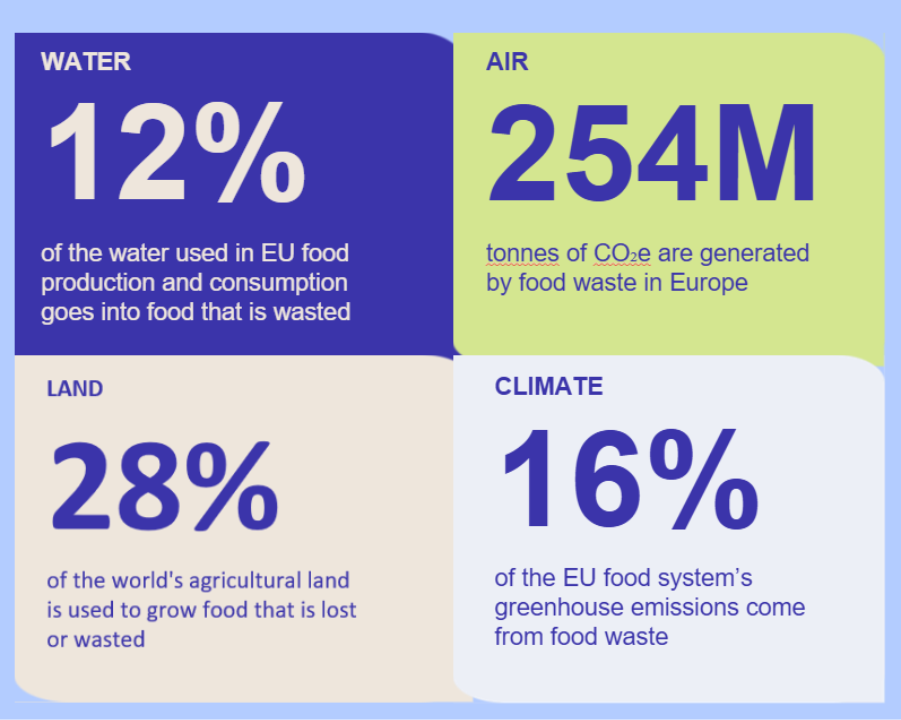
Across the EU, food loss and waste account for 12% of agricultural water use and 16% of greenhouse gas emissions. At the same time, 42 million people face food insecurity.
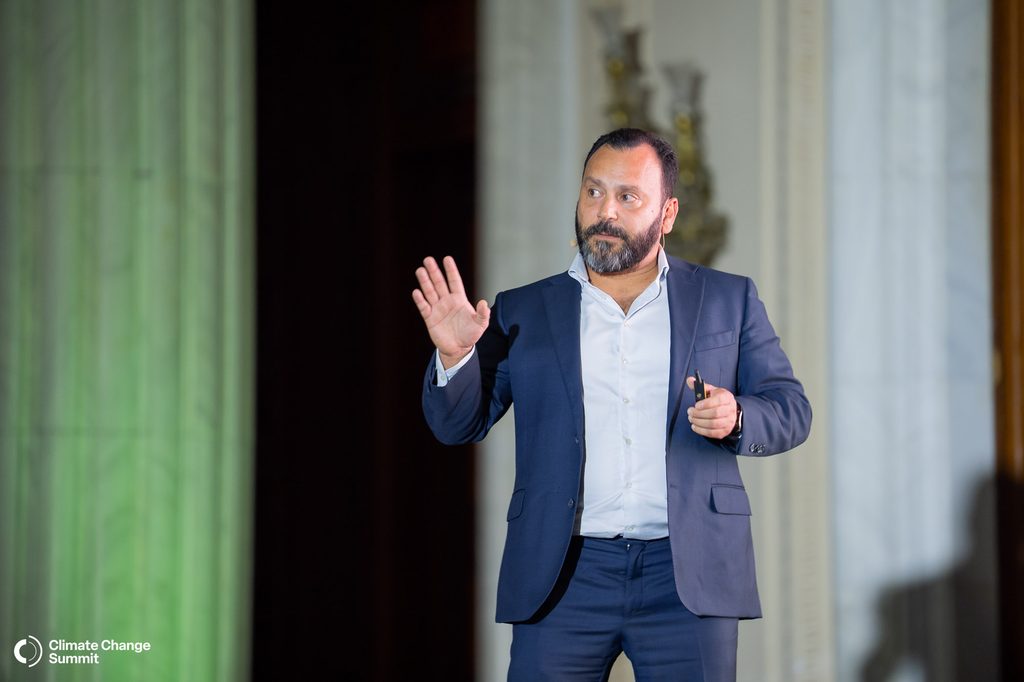
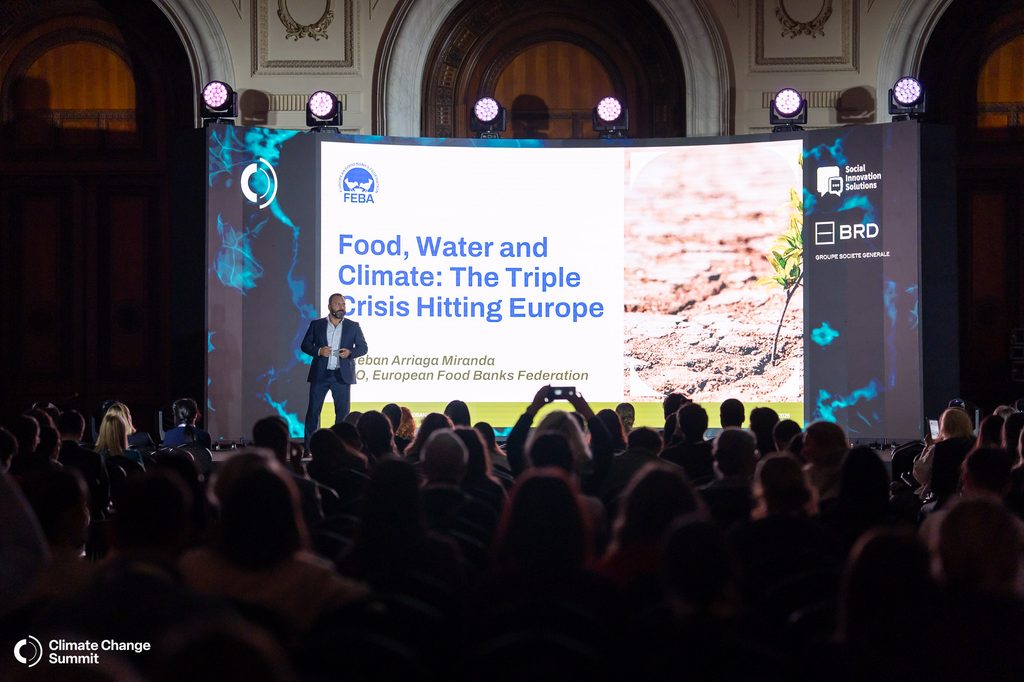
These figures were highlighted by FEBA CEO Esteban Arriaga in his keynote speech, “Food, Water and Climate: The Triple Crisis Hitting Europe,” at the Climate Change Summit 2026, held in Bucharest in October.
Intrested in the topic?
Climate Change Summit: advancing climate action across Europe since 2022
The Climate Change Summit is an annual gathering in Bucharest that brings together NGOs, businesses and individuals to make climate action practical, economically viable and effective. Under the theme “Infrastructures of Our Future,” this year’s summit explored how energy, industry, nature, technology and finance intersect in addressing climate challenges. The discussions focused on building resilient economies and infrastructure for a hotter world, including safer buildings, reliable water systems and adaptive energy grids.
FEBA highlights the role of food banks in climate action
The summit’s 2026 theme, centred on resilient infrastructure for a hotter world, closely aligns with FEBA’s work. Food banks are part of the social infrastructure that is increasingly affected by natural disasters and economic shocks linked to climate change. Many of our members operate in areas already experiencing droughts, heavy rainfall and floods, as well as their wider economic and social consequences.
Food recovery cannot solve drought, climate change or poverty. However, it can reduce the environmental impact of food loss and waste while ensuring that more of the food we produce reaches the people who need it.
The environmental impact of food waste
If food waste were a country, it would be the fifth-largest emitter in Europe. This highlights the significant environmental, social and economic consequences of food waste. Reducing food loss and waste across the entire supply chain can help ease pressure on food systems and strengthen their resilience.
Thank you to the organisers for the opportunity to highlight the role of food banks in climate action.